
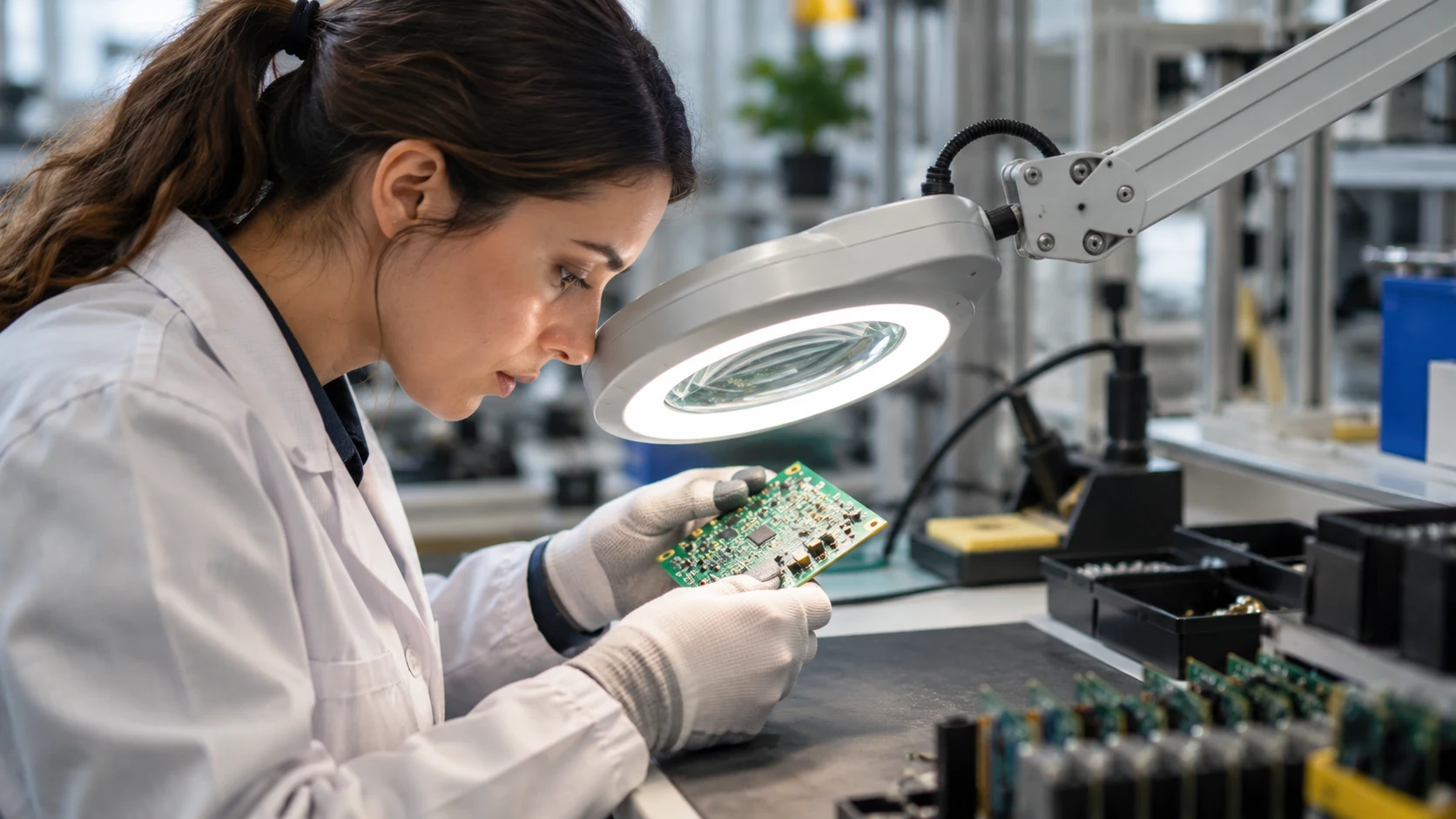
A circuit board does not have to reach the production line before engineers begin planning how to inspect it. That is the direction of a new Siemens and NVIDIA collaboration announced on October 21, 2026.
The project brings inspection preparation into a virtual environment. For manufacturers handling frequent product changes, the question is whether this can make the move from engineering files to production less disruptive.
What the Companies Announced
According to Siemens, the workflow combines its Teamcenter and Process Preparation X software with NVIDIA Cosmos. It uses digital representations of a reference board and synthetic data to prepare automated optical inspection before physical production begins. The work is being demonstrated at Siemens' electronics factory in Erlangen, Germany.
Siemens lists project targets of up to 85% less manual engineering effort for inspection-program generation, more than 40% fewer false calls and more than 5% improvement in first-pass yield. These are project targets reported by the company, not independently verified outcomes or promises for every factory.
Why Preparation Deserves Attention
TechFullNews analysis: Factory technology discussions often focus on the speed of a machine once it is running. Preparation deserves equal scrutiny. A fast line offers limited value if every product change leaves engineers rebuilding its inspection process.
Think of a manufacturer introducing several board variants. The useful question is not simply whether an AI model recognises a component. It is whether the complete preparation process helps the team release a reliable inspection program with less rework.
That means measuring the engineering work around the model: preparing inputs, checking the output, adjusting settings and documenting approval. A shorter demonstration does not automatically mean a shorter production changeover.
The Questions Buyers Should Ask
A practical evaluation should separate three things: engineering effort, inspection quality and production readiness. They are connected, but they are not interchangeable.
Ask a supplier to explain which tasks are included in its time-saving calculation. Does the measurement include reviewing mistakes and updating the program after a design change? Which board types were used, and how different were they from one another?
Quality teams should also ask how incorrect passes are checked alongside false alarms. A system that produces fewer warnings still needs to catch the defects that matter. The acceptance criteria should come from the factory's actual quality requirements, rather than from a convenient demonstration sample.
What to Watch Next
The next useful evidence would be a clearly described evaluation across different products, with the same definitions applied before and after deployment. Manufacturers would also benefit from knowing how much specialist effort is needed to keep the system working when materials, components or inspection equipment change.
For now, the announcement gives electronics manufacturers a specific workflow to investigate: preparing inspection earlier in the product lifecycle. Procurement teams should request evidence from a comparable production environment before turning the project's headline targets into a business forecast.